
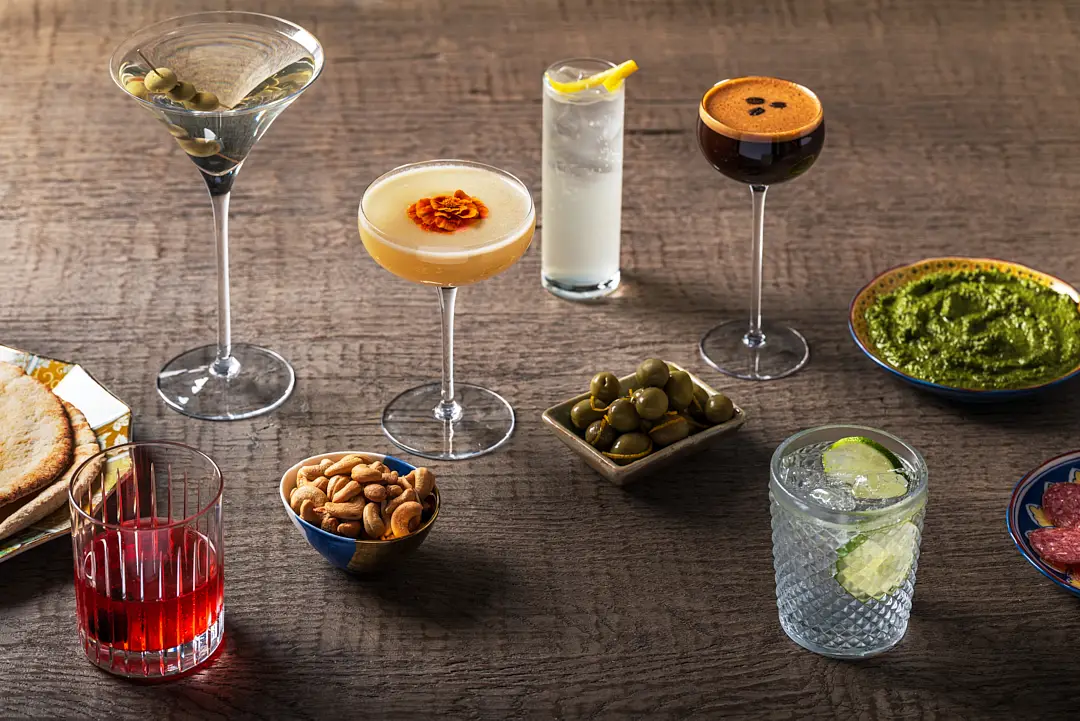
The Basics of Pairing Food and Cocktails
For anyone perfectly comfortable sipping light beer or enjoying sweet, boxed wine, the word pairing might sound a little pretentious. Most people already drink with food. Pizza and beer, wine and pasta, truffle fries and cocktails. So what’s the difference between that and a formal pairing? Mostly, it’s intention. When a dish and a drink are paired with each other in mind, they heighten the experience. Flavors open up. Textures make more sense. Together, they bring clarity, contrast, and balance to everything on the table.
What pairing actually does
Pairing food and drinks is hardly a new idea. It’s as old as eating itself. At its best, it creates balance, contrast, and a sense of cohesion between the two. If you’ve already read the piece on gestalt cocktails, you’re familiar with the principles. Pairing just brings those same ideas to the table. It’s a more expanded look at what balance really means. A good food and drink pairing can engage more of the palate together than either can alone. It can deepen flavor, highlight contrast, or expand a single note into something more complete.
The anatomy of flavor
A balanced plate aims to hit all five tastes: salt, sweet, acid, bitter, and umami. Each one does something different. If you want the full breakdown, it’s covered in the Taste vs. Flavor piece. What matters here is how they work together. They shouldn’t compete or blur. They should move in sequence. Salt gives way to acid. Sweet gives way to bitter. One flavor sets up the next. Like a relay, each one passes something off to the next.
What makes a pairing work
Food and drink pairings can deepen flavor, highlight contrast, or complete a single note. Any of these goals can be achieved through intentional pairing.
Pairing types to know
Pairings tend to fall into a few familiar patterns. Some match flavor for flavor. Others create contrast, playing sweet against sour, sharp against rich, cold against heat. Some build bridges through a shared note. Others shift how the food feels, shaping the texture of each bite. There is no single formula. But most pairings rely on reinforcement, contrast, or a little of both. The categories below are not rules. They are just different ways to shape the effect you are after.
Complement Pairings
Complement pairings work through similarity. That might mean a dominant flavor, like rosemary in both the dish and the drink, or a shared quality like richness, sweetness, or spice. The idea is to reinforce what’s already there, not to repeat it. Some pairings go in bold. Dark chocolate cake with ruby port. Roast lamb with a rosemary-forward gin cocktail. Others are quieter. A subtle note of vanilla in whiskey picked up by a custard or crème brûlée, or the smoke in mezcal mirrored by the char on grilled vegetables. Whether direct or subtle, it’s about letting one element carry something forward from the other. The connection doesn’t need to be loud. It just needs to land.
Contrast Pairings
Contrast pairings work by opposition. The drink adds what the food lacks. This could be brightness, bitterness, acidity, or even edge. A Negroni with rich cheeses like Gorgonzola or Cheddar contrasts in both directions. Bitterness cuts fat, cheese softens sharpness. A Paloma with carnitas works the same way, grapefruit cutting richness. These pairings succeed through tension, not similarity.
Textural Pairings
Textural pairings focus on mouthfeel. The way food and drinks feel as you taste them. Champagne with fried chicken is a classic example. The bubbles scrub the palate clean of grease, resetting each bite. Other pairings work by matching texture. The smoothness of an Old Fashioned mirrors the softness of custard, showing how subtle pairings like these help guide how flavors move across the palate.
A final note on intention
Whether you’re looking to amplify a note, strike a contrast, or reset the palate entirely, each of these pairing types offers a different way to shape the experience. They’re tools, not rules. Starting points for making intentional choices. When the pairing works, the food carries further and the drink settles in more naturally.